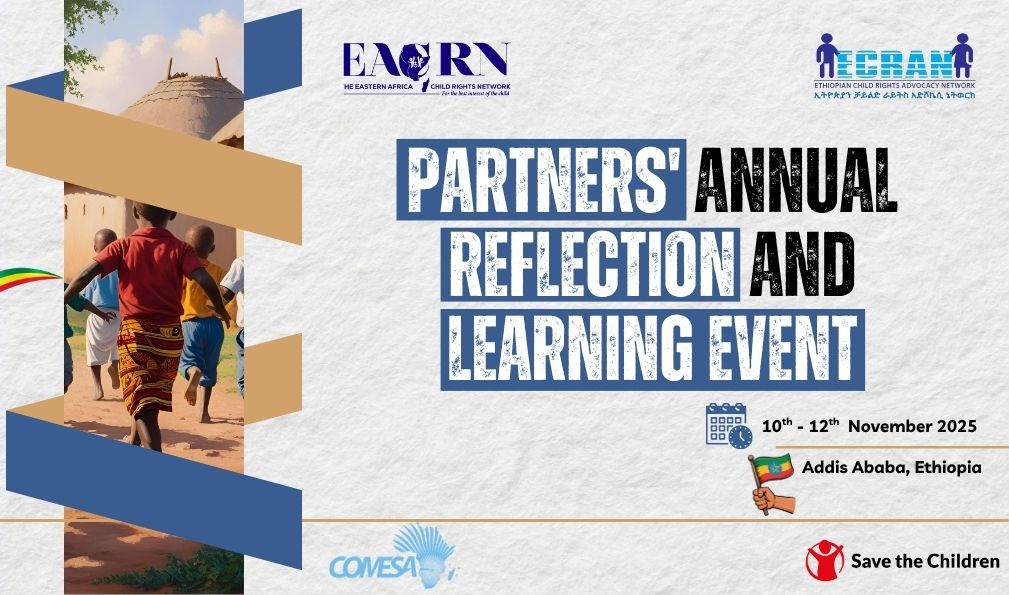
The Annual Partners Reflection and Learning Meetings.
The Annual Partners Reflection, and Learning Meeting (APRLM) is a crucial event for the Eastern Africa Child Rights Network (EACRN) as it strengthens partnerships with key stakeholders across the region. This meeting provides an important opportunity to assess the Network’s progress, impact, and sustainability while reflecting on the achievements, challenges, and lessons of the year. It serves as a platform for members to share lived experiences, showcase best practices, and deepen peer-to-peer learning to enhance child rights advocacy efforts across Eastern Africa.
Beyond reflection, the meeting fosters collaboration, transparency, and the alignment of shared goals among EACRN members and partners. It promotes collective strategizing to ensure the Network’s continued relevance and effectiveness in advancing child rights.
It is against this background that EACRN is planning to hold its 11th Annual Partners Reflection and Learning Meeting in November 2025 in Addis Ababa, Ethiopia, under the theme: Enhancing CSOs Partnerships in promoting Child Rights, in the wake of the Global Funding Crisis.
Background
Children across Eastern Africa face significant challenges that threaten the full realization of their rights. Issues such as armed conflict, displacement, harmful cultural practices (including child marriage and female genital mutilation), limited access to quality education and healthcare, online child sexual exploitation and abuse (OCSEA), and increasing impact of climate change continue to affect millions of children. Despite efforts by governments and civil society organizations to address these challenges, progress remains uneven and, in some contexts, fragile, especially in the current situation where CSOs are being faced with the development Aid crisis.
The African Charter on the Rights and Welfare of the Child (ACRWC) and the United Nations Convention on the Rights of the Child (UNCRC) both emphasize the urgent need to protect and promote children’s rights, guided by the four fundamental principles:
- Non-Discrimination: All children must enjoy their rights without discrimination of any kind.
- Best Interests of the Child: This must be a primary consideration in all actions concerning children.
- Right to Life, Survival, and Development: Every child has an inherent right to life and development to the maximum extent possible.
- Respect for the Views of the Child: Children have the right to freely express their views and have them given due weight in decision-making processes.
In light of these challenges and guiding principles, advancing children’s rights in Eastern Africa is not just a moral imperative but a legal and developmental priority. Regional cooperation, capacity strengthening, and innovative partnerships are crucial to accelerating progress toward a safer, fairer world for all children.
Thematic Areas of Focus
To strengthen collaboration, deepen learning, and foster new partnerships, the 2025 Annual Partners Reflection, and Learning Meeting will center around key thematic areas that are critical to advancing children’s rights across the Eastern Africa region. Each thematic area will offer opportunities for technical engagement, joint strategizing, and resource mobilization with partners working in the related fields.
The following thematic areas have been prioritized:
- Child Rights and Budgeting: The theme for the Day of the African Child is on “Planning and budgeting, progress since 2010,” and as EACRN, we are looking at strengthening national efforts to promote child-responsive budgeting and ensuring increased investment in children through public financing.
- Child Rights in Business: We look at addressing the impact of the private sector on children’s rights and promoting responsible business practices that safeguard children’s well-being.
- Children Affected by Armed Conflicts (CAAC): Build capacities of our national members on enhancing protection mechanisms, psychosocial support, and reintegration initiatives for children impacted by armed conflict and insecurity. The discussions will also focus on the six Grave Violations on Children’s Rights as proclaimed by the UNCRC and the impact of armed conflicts on Education. Reflections on the implementation of the Safe Schools Declaration (SSD) by Eastern Africa countries and the role of CSOs in advancing advocacy on the implementation of SSD.We will also delve into how child rights CSOs and partners can promote the participation of children in peace processes.
- Climate Change and Children Rights: With the Africa Climate Summit happening this year, we will look at the possibilities of exploring the intersection of climate change and child rights and advancing climate-responsive child protection, resilience, and advocacy strategies in the Eastern Africa Region.
- Online Child Sexual Exploitation and Abuse (OCSEA): Building stronger child protection and safeguarding systems against online abuse and exploitation and promoting digital safety and literacy for children.
- Harmful Cultural Practices: Intensifying efforts to eliminate practices such as child marriage and female genital mutilation (FGM/C) that violate children’s rights in the Eastern Africa Region
- Early Childhood Development (ECD): Promoting investment in early childhood care, health, education, and protection services to secure strong foundations for children’s lifelong well-being.
- Child Trafficking and Migration: Strengthening the regional responses to prevent trafficking, protect children on the move, and uphold the rights of migrant, displaced, and refugee children.
- Shrinking Civic and funding space: This thematic area will focus on the impact of funding/ Aid on the civic engagements and Enabling Environment for CSO operation in Eastern Africa, with focus on child rights advocacy. The conversations will explore the trends in civic space reports across the continent and how CSOs can navigate and create resilience to safeguarding the progress achieved in the protection of human rights.
Objectives
The objectives of the Annual Partners Reflection and Learning Meeting of 2025 is to;
- Capacity Building: Enhance the knowledge and skills of coalition members and child rights actors on emerging and priorities in child rights governance issues.
- Reflection and Stocktaking: Review progress and challenges in promoting and protecting children’s rights in member countries.
- Strategic Partnerships and Collaboration: Foster stronger partnerships among members across thematic child rights areas for joint advocacy and programming.
- Learning Exchange: Share good practices, innovations, and lessons learned in child rights advocacy and programming.
- Midterm Review of EACRN Strategic Plan: Allow members to appreciate the efforts and milestones in the implementation of the 2022-2027 EACRN strategic plan
Expected Outcomes
We project to achieve the following outcomes:
- Coalition members’ capacities strengthened on key child rights governance and protection issues.
- A documented reflection report highlighting country progress, best practices, and gaps.
- Clear action points and collaborative initiatives agreed upon across thematic areas in engaging with duty bearers from national, RECs, AU and UN levels.
- Enhanced network solidarity and shared advocacy agenda for 2025/2026.
- Improved implementation strategies in line with our strategic plan of 2022-2027
Methodology
The Annual Partners Reflection and Learning Meeting will be conducted physically in Addis Ababa, Ethiopia, with a hybrid format provided for members and partners who are unable to attend in person. This approach will ensure inclusive participation across the Eastern Africa Child Rights Network and enable broad engagement from both regional and international stakeholders. The meeting will be conducted in English with provision of French interpretation.
The meeting is scheduled to take place over three days, structured as follows:
- Day 1:
- Official opening session, including keynote speeches and solidarity remarks from partners.
- Presentation of reports by member coalitions, highlighting progress, achievements, challenges, and lessons learned.
- Reflection discussions on the collective progress of the Network and review of the strategic plan of 2022-2027.
- Day 2 and Day 3:
- The focus will shift towards capacity-building sessions, delivered through expert presentations, thematic workshops, and interactive group work.
- Each session will align with the identified child rights thematic areas such as child rights and budgeting, climate and children, OCSEA, child rights in business, FGM/C and its survivors, child trafficking and migration, among others.
- Opportunities for collaboration, joint advocacy planning, and strategic partnership development will be integrated into thematic discussions.
- Intergenerational Dialogue: This session is an opportunity for the child rights actors to listen to the children’s views. It is an interactive session where children will share and ask questions to duty bearers and CSOs both physically and online on key issues and the outlined thematic areas, with a focus on enhancing child participation in decision making processes on matters that affect them.
A combination of panel discussions, thematic breakout groups, case study presentations, and peer learning activities will be used to maximize engagement, foster knowledge exchange, and drive actionable outcomes.
Participants
The meeting will bring together representatives from the national coalitions: Tanzania Child Rights Forum (TCRF), Uganda National Child Rights NGO Coalition (UCRNN), Rwanda Child Rights Coalition (Umwana Ku Isonga), Burundi Child Rights Coalition (BCRC), Burundi Child Rights Forum (BCRF), Madagascar Child Rights Network, Child Rights Civil Society Coalition-South Sudan (CRCSC), the Kenya Alliance for Advancement of Children (KAACR), Somaliland Child Rights Forum (SOCRIF) and Sudan Child Rights Forum (SCRF), the Ethiopia Child Rights Advocacy Network (ECRAN), potential members from Somalia and the Democratic Republic of Congo will also be invited.
Key partners and strategic stakeholders will be invited to participate in the meeting to foster collaboration, strengthen partnerships, and promote shared learning.
Registration link:
Please find the registration link here: https://eacrn.net/all-events/